
From a Small Truck Idea to a ₹4,300 Crore Logistics Empire: The Porter Story
Small truck idea to a ₹4,300 crore logistics business — Porter success story
STARTUP TO STANDOUTSUCCESS STORY
Thrive Vision
12/8/20253 min read
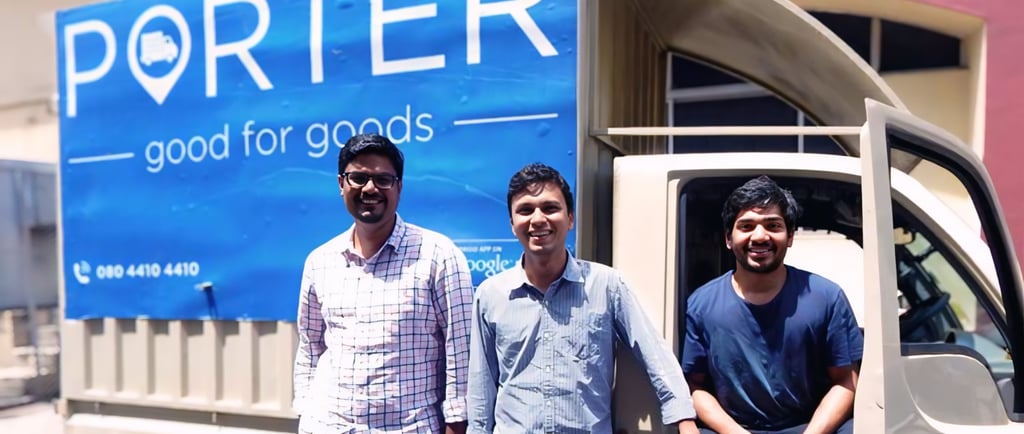
From a Small Truck Idea to a ₹4,300 Crore Logistics Empire: The Porter Story
Urban India has changed fast over the past decade. We can get food delivered in 10 minutes, order groceries at midnight, and have packages delivered across cities within a day. But behind all this convenience is something we hardly think about: logistics, especially in-city transport.
For years, moving goods across the city was a messy affair. Be it some small business trying to ship products or households shifting furniture, the process was unreliable, overpriced, and convoluted. There were phone calls to the local transporters, no clarity on cost, drivers arriving late or not at all, and absolutely no transparency.
This is the world that Porter's founders stepped into.
The Problem No One Was Solving
The story of Porter starts with three IIT graduates: Pranav Goel, Utkarsh Gupta, and Vivek Malhotra.
They realized something most people ignored:
Trucks inside cities are always in demand.
Drivers can't find steady work.
Businesses struggle to find reliable transport.
It was a simple inefficiency, yet massive in scale.
The question that the founders asked themselves was so simple:
Why is booking a mini truck not as seamless as booking a cab?
But the question wasn’t just an idea; it was an insight. And insights are what strong businesses are built upon.
Starting Small — Literally, Just a Few Mini-Trucks In 2014, the founders set up a small office in Bengaluru. There was no large funding or big corporate backing.
Just conviction and a willingness to do the hard, boring work.
They met drivers personally and explained how the platform would help them, gained their trust slowly. They did not start off with building for luxury companies. They focused on local kirana stores, small manufacturers, wholesalers, and individual movers.
Their early days looked like this:
Calling truck drivers personally
Negotiating prices personally
Convincing early customers to try out a new service.
Problem solving on the road, not from laptops
This wasn't a tech startup in the glamorous sense; this was ground-level execution.
The Hard Part — Losses, Doubts, and Delayed Wins It wasn't profitable for many years.
They were growing, yes but at a cost.
Marketing, expansion in cities, paying drivers, developing the technology all these required money. At one point, the firm reported a ₹96 crore loss.
This is the stage where most startups shut down or sell out.
But Porter didn't.
Instead of cutting down, they reworked their business model:
More accurate pricing algorithms
Improved onboarding & training for drivers
Enhanced in-app experience for businesses
Clear tracking features that build trust
They learned what worked-and more importantly, what didn't.
The Breakthrough
As time passed, so did customer trust. Drivers realized that Porter enabled them to make more money on a regular basis.
Organisations felt Porter was reliable and predictable. The demand surged.
And then something remarkable happened:
Porter turned profitable.
This company went from a ₹ 96 crore loss to a ₹ 55 crore profit, not over a decade, but within just one year.
This wasn’t luck. This was system-level problem solving.
Where Porter Stands Today
Fast-forward to today, Porter is no longer a small startup. It is a ₹4,300-crore logistics powerhouse. Operating across major Indian cities. Serving over 100,000 businesses Providing stable income for thousands of drivers. Growing 57% YoY - what most industries only dream of
From small shop deliveries to corporate logistics, Porter has become part of the daily movement network of India quietly, yet significantly.
You may not see their ads everywhere.
But you'll see their trucks everywhere.
Why Porter’s Story Matters
It's easy to think that a successful startup begins with fancy investors, a futuristic idea, and glamorous launch events.
As Porter reminds us:
Real problems exist all around us-if we pay attention.
Impactful businesses start small, very small
Growth comes from solving everyday pain points.
Technology is powerful only when applied to real needs.
Porter didn’t create a new market.
They just organized a messy one.
And sometimes, that's where the biggest opportunities lie.
The Bigger Lesson: Dreams Don't Need Big Beginnings. The finished picture often looks clean in our success stories. But the starting point is usually just like Porter's:
Small room
Limited funds
Sleepless nights
A problem worth solving The founders didn't wait for perfect conditions. They didn't wait for a big investor to believe in them first. They started - and continuously improved. That's the difference. Won't happiness and affection be repaid with distrust, disdain, and treachery? Your takeaway? If you have spotted a problem that people simply "accept, " dig deeper. The next big business might not be about new technology. Maybe it's about bringing order where everyone sees chaos. Just as Porter did.
Inspiration
Explore success stories and motivational journeys today.
Growth
Vision
© 2025. All rights reserved.