
How to Manage Risk like a Pro in Crypto Trading
How to Manage Risk like a Pro in Crypto Trading
FINANCE
Thrive Vision
11/4/20255 min read
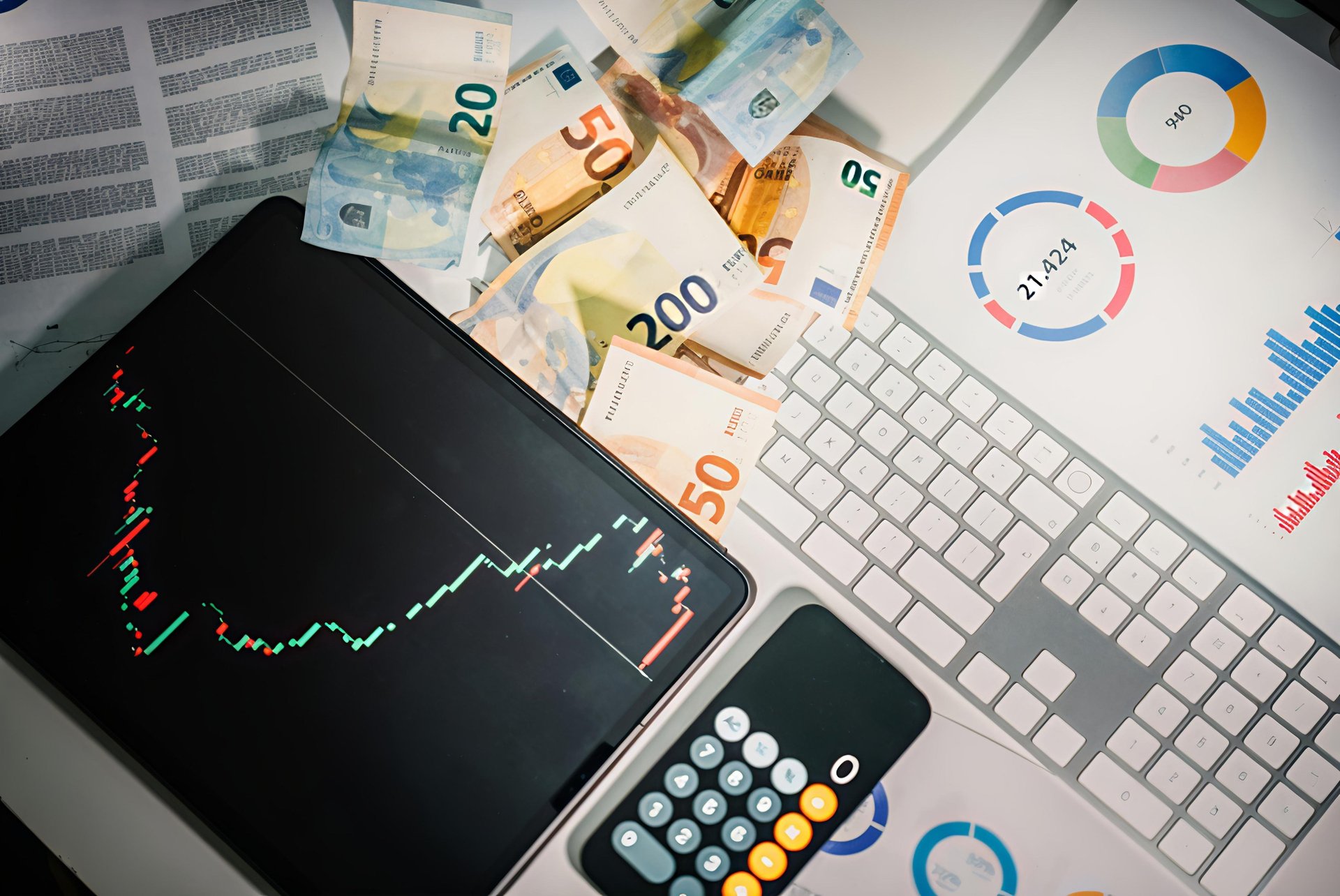
Because in crypto, surviving is winning.
It was the responsibility of the government alone to safeguard the interest of the nation and to impose what was believed necessary for the country.
Introduction: The Art of Not Losing
Everybody wants to talk about profits: the 10x coins, the million-dollar trades, the overnight success stories. But here's the truth that separates traders who last from those who fade out in just one bear market:
“The best traders don’t focus on making money they focus on not losing it.”
In crypto-land, risk management isn't just a buzzword; it's a survival skill. And the difference between blowing up one's account and building long-term wealth lies in one thing: the way you manage risk in Bitcoin, Solana, or that shiny new meme coin.
Let's break down how pros handle risk-from portfolio structure to emotional discipline-and how you can apply their mindset in the high-stakes crypto landscape of 2025.
1. Understand What You're Really Risking
Before you click that “Buy” button, consider:
How much of your total portfolio are you risking?
What happens if this trade goes wrong?
Are you risking money that you cannot afford to lose?
Professional traders never risk more than 1–2% of their total capital on a single trade. That means if your portfolio is worth ₹10 lakh, your maximum loss per trade should be ₹10,000–₹20,000.
It sounds small, right? But this small limit keeps you alive long enough to catch the next big opportunity.
Crypto rewards patience, not recklessness.
2. Position Sizing - The Pro's Secret Weapon
Most beginners focus on what coin to buy. Pros focus on how much to buy.
Your position size is the first layer of defense. Even a good trade idea can become disastrous if the position size is too big.
Here's how the pros calculate it:
Position Size Formula:
(Account Size × % Risk per Trade) / (Entry Price − Stop Loss Price)
Example:
You have ₹1,00,000. You want to risk 1% (₹1,000).
If you buy Ethereum for ₹2,00,000 with a stop loss at ₹1,95,000, you're risking ₹5,000 per coin.
So, ₹1,000 ÷ ₹5,000 = 0.2 ETH position.
Simple math, huge impact
3. You Always Have a Stop-Loss and Respect It
The biggest enemy of traders? Ego.
Many refuse to set stop loss because they "believe it'll bounce back."
But in crypto, the markets move 20–30% overnight. That "bounce" might burn your portfolio before breakfast.
A stop-loss is not a sign of weakness - it's an insurance policy.
Set it. Stick to it. Move it only when the market moves in your favor-not against you.
Pro tip: If you’re afraid to set a stop loss, your position is probably too big. Reduce it.
Diversify But Don’t Overdo It
4. Diversification is the ultimate risk-management cliché, but it works.
Never invest all your capital in one coin, no matter how confident you are.
A smart rule of thumb:
40–50% in blue-chip assets like Bitcoin, Ethereum.
30% in mid-cap growth projects: Solana, Chainlink, Avalanche, etc.
10–15% in high-risk speculative plays.
5–10% in stablecoins for liquidity and buying dips.
But avoid over-diversification. Owning 50 random tokens isn't strategy; it's chaos.
You can't manage what you can't track.
5. Know When to Take Profits
Ironically, many traders lose money not because they didn't make profits but simply because they didn't lock them in.
Pros scale out gradually.
For example:
Sell 25% of your position when it is up 30%.
Another 25% when it's up 50%.
Let the rest ride with a trailing stop.
This approach takes away emotion: You take money off the table but you're still in the game.
Remember: “You never go broke taking profits.”
6. Acknowledge that losing is part of the game.
Even the best traders in the world will lose trades, and often.
A pro might only win 50–60% of the time, yet still end up massively profitable.
How?
Because they control risk-to-reward ratio.
If you are risking ₹1,000 to make ₹3,000, you can be wrong twice and right once and still win overall.
That's what pros call asymmetric risk small losses, big wins.
7. Manage Emotional Risk
Markets don't just test your strategy - they test your psychology.
More traders have been wiped out by greed, fear, FOMO and revenge-trading than by any bear market.
Discipline is your greatest edge.
Follow your plan, not your impulses.
Try these mental hacks:
Don't check charts every five minutes.
Journal your trades both wins and losses.
Do not watch candles all day, use alerts.
Accept that missing a trade is better than forcing one.
Trading is not about prediction; it's about reaction with control.
Stable coins & Cash
8. Use Strategically
Pros always keep dry powder, funds ready to be deployed the moment opportunity strikes.
Having stablecoins-both USDT and USDC-allows you to buy dips without having to liquidate other assets at losses.
Just think of it like keeping ammo ready in a market war.
Holding cash isn't weakness. It's power.
When others panic, you're ready to strike
9. Track Data — Not Hype
Everyone sounds smart during crypto bull runs, but data never lies.
Utilize analytics platforms like:
CoinGlass - for funding rates & open interest
DeFiLlama (for total value locked)
TradingView - for technical analysis.
CoinMetrics, or Messari for on-chain trends
If you can't measure your trades, you can't improve them.
Trading without data is like driving blindfolded at 200 km/h
10. Master the "2% Rule of Survival"
The most successful traders live by this principle:
Never lose more than 2% of your total capital in one day.
If you hit your daily loss limit, cease to trade.
Walk away.
Reset your mind.
This single rule saves years of effort and millions of rupees.
In crypto, survival is success.
Bonus Tip: Think Long-Term, Even When Trading Short-Term
Crypto trading is often about timing, but wealth is about time in the market.
Allocate a portion of your profits to long-term holds in assets you truly believe in.
Bitcoin, Ethereum, Solana whatever fits your conviction.
That way, your long-term portfolio continues to compound, even if the short-term trades go wrong.
Trading makes money. Investing builds wealth.
It seems that Calvinists would be required to modify this particular belief, or at the very least they could not consider it to be entirely crucial. The Pro Mindset Let's summarize how pros think differently: Novice Trader Professional Trader Chases every pump Waits for clear setups Trades based on emotion Trades based on probability Aiming for quick profits Aiming for long-term consistency Risks big to win big. Risks small to win bigger. Reacts Plans Professional trading is not glamorous; it's methodical, boring, and disciplined. But that's what builds wealth over time.
Avoid using abbreviations found in your tables or figures in the text if possible.
Summary:
Protect the downside, the upside will take care of itself. Crypto markets will always be wild; they'll crash, pump, and test your patience. But if you learn to manage risk like a pro, you'll stay in the game long enough to see incredible rewards. As Benjamin Graham, the mentor of Warren Buffett, once said "The essence of investment management is the management of risks, not the management of returns." In crypto, the biggest fortunes are made not by those who predict every move but by those who protect their capital while everyone else is losing theirs. So next time you trade, remembe: the goal is not to profit today. The aim is to be trading profitably in five years' time.
Inspiration
Explore success stories and motivational journeys today.
Growth
Vision
© 2025. All rights reserved.